DeepSeek's R1 training process has garnered attention in AI research due to its distinctive methodology. Many people, especially beginners, want to understand how it works without being overwhelmed by technical details. The method benefits multiple industries by enhancing training efficiency and accuracy.
By studying R1, learners find why DeepSeek is considered an AI innovator. The approach promotes improved performance in real-world tasks, expedites progress, and minimizes wasted effort. Examining the various phases reveals how models are more effective in adjusting to new information. Novices gain insight into how the process works, its significance, and its role in advancing AI.

DeepSeek created R1 to build AI systems that can learn patterns more reliably. To ensure that models produce consistent results, the process seeks to strike a balance between accuracy and training depth. Unlike conventional techniques, R1 employs layered optimization, enabling systems to adjust performance without compromising speed.
Beginners should view it as a guided path that improves the context-based understanding of information by AI models. Additionally, the procedure minimizes training waste, requiring fewer resources to produce high-quality results. Knowing its goal explains why DeepSeek places such a strong emphasis on scalability and adaptability. The need to train AI systems that can accurately and consistently solve real-world problems is reflected in the design.
The R1 training method is based on well-defined principles that facilitate effective and adaptable learning. One principle focuses on reinforcement signals that guide better decision-making. The balance between generalization and accuracy is another principle that ensures performance across a variety of tasks.
A third principle emphasizes iterative refinement, where the model improves with each cycle. Together, these ideas produce AI systems that are dependable and flexible in novel situations. Novices should view them as the cornerstone for creating strong models. Every principle is related to DeepSeek's mission to enhance the effectiveness of AI in everyday applications. These guiding principles provide direction and measurable progress for the process.
The R1 process follows a clear set of steps, from data preparation to refinement. To ensure that data is prepared for analysis, the first stage concentrates on gathering and cleaning datasets. Pre-training is the second step, during which the model gains knowledge of broad patterns in vast quantities of data.
Reinforcement, the third step, adds feedback loops that sharpen accuracy and efficiency. The model adjusts to particular tasks and situations in the fourth stage, known as fine-tuning. Lastly, evaluation assesses performance to validate advancements and pinpoint areas that require modification. Every step builds on the one before it, forming an organized route to more intelligent learning. This methodical approach demonstrates to novices how R1 blends accuracy and flexibility.
Those investigating contemporary AI systems can clearly benefit from the R1 process. Efficiency is one benefit, as models can learn more quickly without consuming unnecessary computer resources. Another is accuracy; in real-world scenarios, R1 produces results that match expectations. Additionally, the process promotes flexibility, enabling systems to share knowledge across domains.
R1 is also highly scalable, handling large datasets without performance loss—something beginners quickly notice. Reliability, with fewer errors than less structured approaches, is a final benefit. These advantages demonstrate why businesses select DeepSeek's methodology for cutting-edge AI solutions. R1 is a solid basis for numerous applications due to its speed, accuracy, and adaptability.
The R1 process yields powerful results across various domains of artificial intelligence. It helps models better comprehend and produce text that is human-like in natural language processing. In computer vision, R1 reduces object detection errors and improves recognition accuracy.
It is used in predictive analysis, which helps sectors that depend on insights gleaned from data. R1 is used in healthcare to support diagnostics, and more accurate forecasting models are useful in finance. By utilizing adaptive AI systems to deliver personalized learning experiences, educational platforms also benefit. The broad range of applications demonstrates R1's versatility across industries. Novices can observe how the procedure goes beyond research and directly addresses practical requirements.
R1 has clear advantages, but applying it to large-scale systems still poses challenges. The demand for resources is one issue, as effective training requires powerful computer hardware. Data quality presents another challenge because subpar inputs yield subpar model outputs. Careful development supervision is also necessary to maintain the right balance between speed and accuracy.
Novices should recognize that ethical issues arise, particularly in relation to fairness and data use. Scaling R1 across industries can be challenging, especially for specialized tasks. DeepSeek continues to refine the procedure to enhance accessibility and reliability despite these challenges. By addressing these issues, R1 will remain applicable to both research and practical solutions.
As AI continues to be adopted across industries, R1's future appears bright. Experts anticipate that as reinforcement and unsupervised learning techniques are better integrated, the process will change. Additionally, faster and more economical training cycles will be supported by increases in processing power. With R1 emerging as a standard approach, novices should view it as an opportunity for creativity. Its adaptability enables it to be applied in emerging fields such as autonomous systems and robotics.
Through responsible design and transparency, researchers are also attempting to lessen ethical concerns. R1 is anticipated to influence the subsequent phase of AI development with ongoing enhancement. Its function will grow to include consumer and business applications globally.
The R1 training method, developed by DeepSeek, represents a significant advancement in the field of artificial intelligence. It offers an organized method for training successful models by fusing efficiency, accuracy, and adaptability. From data preparation to refinement and evaluation, novices can observe the connections between its phases. While the difficulties emphasize the need for balance, the advantages demonstrate why R1 is widely used across industries. R1 will continue to evolve in the future to address ethical and technical issues. By understanding the underlying process, we gain clearer insight into how AI systems learn, adapt, and evolve. R1 serves as the cornerstone for more intelligent, scalable, and dependable AI systems.

How AI with multiple personalities enables systems to adapt behaviors across user roles and tasks

Effective AI governance ensures fairness and safety by defining clear thresholds, tracking performance, and fostering continuous improvement.

Explore the truth behind AI hallucination and how artificial intelligence generates believable but false information
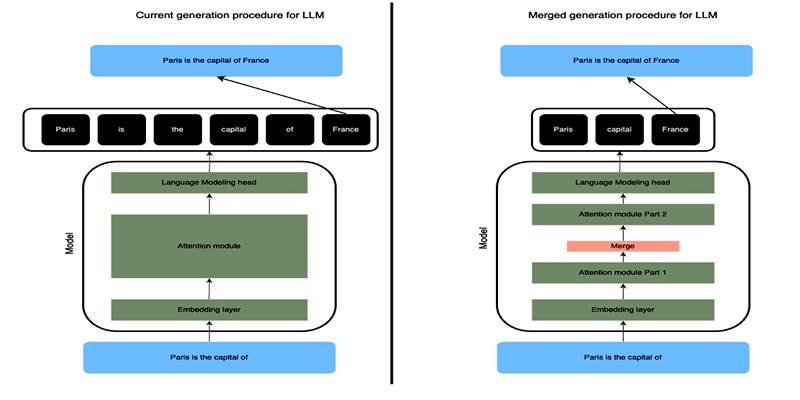
Learn how SLERP token merging trims long prompts, speeds LLM inference, and keeps output meaning stable and clean.

How to approach AI trends strategically, overcome FOMO, and turn artificial intelligence into a tool for growth and success.
Explore how Keras 3 simplifies AI/ML development with seamless integration across TensorFlow, JAX, and PyTorch for flexible, scalable modeling.

Craft advanced machine learning models with the Functional API and unlock the potential of flexible, graph-like structures.

How to avoid common pitfalls in data strategy and leverage actionable insights to drive real business transformation.

How neural networks revolutionize time-series data imputation, tackling challenges in missing data with advanced, adaptable strategies.
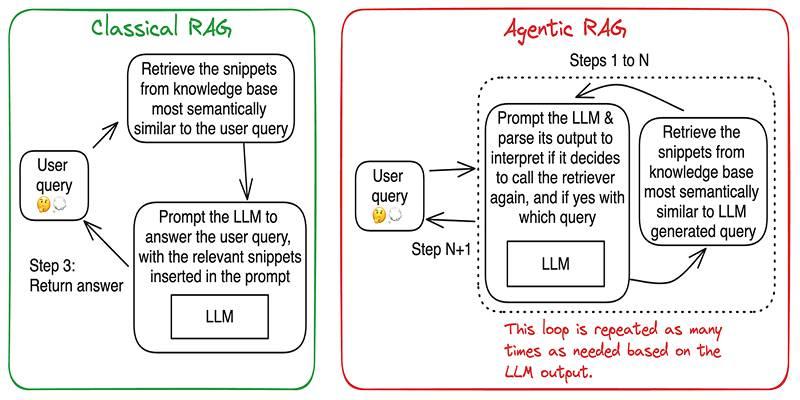
Build accurate, explainable answers by coordinating planner, retriever, writer, and checker agents with tight tool control.
Learn when to use threads, processes, or asyncio to handle I/O waits, CPU tasks, and concurrency in real-world code.

Discover DeepSeek’s R1 training process in simple steps. Learn its methods, applications, and benefits in AI development