Think about how cool it would be to hear a new Beatles song in 2025. Doesn't that sound impossible? But that did happen. Their song "Now and Then" came out in late 2023 and won a Grammy in 2025. That shocked a lot of people. After all, John Lennon and George Harrison, two of the Beatles, are no longer alive.
So, how was this music made? Artificial intelligence is the answer. But not in the way you may assume, this song wasn't written by computers or sung by synthetic voices. It's based on a demo that Lennon made in the late 1970s. AI was only utilized to make the sound better. The other Beatles helped finish the song. It's a blend of things from the past and things from the present.
The song 'Now and Then' has been around for a long time, but it remained unfinished. He recorded it using a cassette player in the late 1970s. It was a rough demo with only his voice and keyboard. Yoko Ono handed the cassette to the other Beatles after John died in 1980. During the Anthology project in the 1990s, they worked on the song.
Ringo Starr, George Harrison, and Paul McCartney all tried to make the demo into a full song. But the sound quality wasn't good enough. It was hard to tell where Lennon's voice ended and the piano began. Back then, technology hadn't evolved enough. They quit and left it unfinished. The demo sat there for years without being touched, until newer tools came along. That's when the dream of finishing "Now and Then" came back to life.
A lot of the time, when people hear "AI music," they think of melodies or voices that aren't real. But "Now and Then" is not the same. No one employed AI to make anything new. Instead, AI was utilized to fix and clean up the original demo. It was hard to hear John Lennon's voice clearly on the ancient tape. His voice was drowned out by background noise and piano notes.
A group that worked with Peter Jackson, who made the 2021 Beatles documentary Get Back, devised a tool employing machine learning. That tool could pick out voices from old recordings that were loud. They used the same method to tidy up Lennon's singing. AI helped differentiate his voice from the piano. It made it possible for the music to be mixed and produced by professionals.
The other Beatles could come back to work once Lennon's clean voice recording was ready. In 2023, Paul McCartney and Ringo Starr went back to the studio. They produced new instrumentals and harmonies. Paul also contributed a string arrangement to the song. Also, the guitar part by George Harrison that was recorded in the 1990s was included.
It made "Now and Then" sound like a real Beatles song. Each of the four members made their unique contributions. It was a blend of old and new, a voice from the past that friends brought back to life. The final rendition sounds full of feeling. It's not just a demo that has been fixed. It's a finished Beatles song that shows love, care, and respect.
The song won Best Rock Performance at the Grammy Awards in 2025. For many people, that moment was shocking. How is it possible for a band from the 1960s to win a Grammy in 2025? But once they knew what the song was about, they liked it more. Fans were happy, nostalgic, and many cried.
Many people were moved by hearing Lennon sing again. It seemed like magic that technology could bring back a song that had been lost without affecting its soul. John Lennon's son accepted the prize for the band on stage. It was an emotional time—people who don't normally like AI were moved.
The "Now and Then" music video provided much more complexity. Peter Jackson, who also made the Get Back documentary, made it. He used a mix of archival material, new clips, and innovative images. It portrays John Lennon and George Harrison in old movies, standing next to Paul and Ringo in the present. Some individuals thought it was sweet.
Some people stated it felt a little off. But it never said it was actual or live footage. It was only a tribute to the band's journey. The film displays memories, love, and the strong friendship among the four Beatles. The pictures fit the music's mood. They help tell the story of a song that was lost. The video shows us that the Beatles were more than just a band.
AI-generated music and AI-assisted music are very different from each other. Songs made entirely by AI are created from scratch using artificial voices and generated music. They might replicate a voice or style without asking. But "Now and Then" is not like that at all. AI was a tool in this scenario, not a creator. It didn't write songs or fake Lennon's voice.
It just helped make an old recording cleaner. Lennon's demo or his bandmates played every part of the finished song. Paul McCartney even said that AI was not used to "invent" anything. People always knew that the Beatles were good at using new technology. It is just one more illustration of such a spirit. AI can benefit artists, but only if they utilize it carefully.
"Now and Then" is more than simply another song. It's the last chapter in The Beatles' long story. AI didn't take over; it just helped show what was already there. The last time, Lennon sang, McCartney played bass, Harrison played guitar, and Starr played drums. It shows that feelings and technology can operate together. People didn't just hear music; they felt a connection. And by doing that, they said farewell in the best way possible. It had nothing to do with the future of music. It was about remembering the past with care, love, and a little help from AI.
How AI with multiple personalities enables systems to adapt behaviors across user roles and tasks

Effective AI governance ensures fairness and safety by defining clear thresholds, tracking performance, and fostering continuous improvement.
Explore the truth behind AI hallucination and how artificial intelligence generates believable but false information
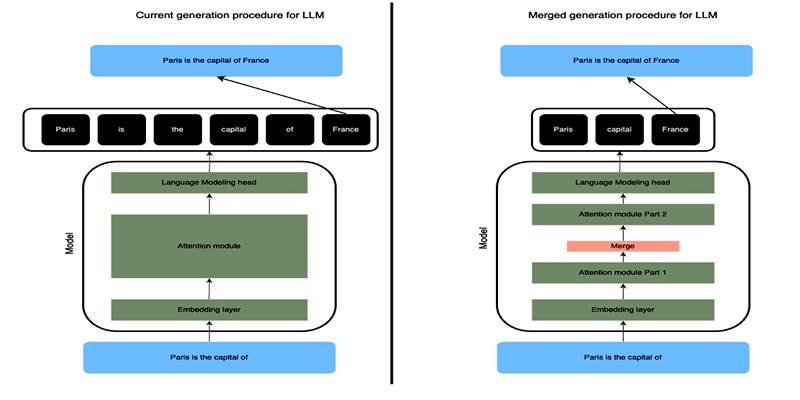
Learn how SLERP token merging trims long prompts, speeds LLM inference, and keeps output meaning stable and clean.
How to approach AI trends strategically, overcome FOMO, and turn artificial intelligence into a tool for growth and success.
Explore how Keras 3 simplifies AI/ML development with seamless integration across TensorFlow, JAX, and PyTorch for flexible, scalable modeling.

Craft advanced machine learning models with the Functional API and unlock the potential of flexible, graph-like structures.

How to avoid common pitfalls in data strategy and leverage actionable insights to drive real business transformation.
How neural networks revolutionize time-series data imputation, tackling challenges in missing data with advanced, adaptable strategies.
Build accurate, explainable answers by coordinating planner, retriever, writer, and checker agents with tight tool control.
Learn when to use threads, processes, or asyncio to handle I/O waits, CPU tasks, and concurrency in real-world code.
Discover DeepSeek’s R1 training process in simple steps. Learn its methods, applications, and benefits in AI development